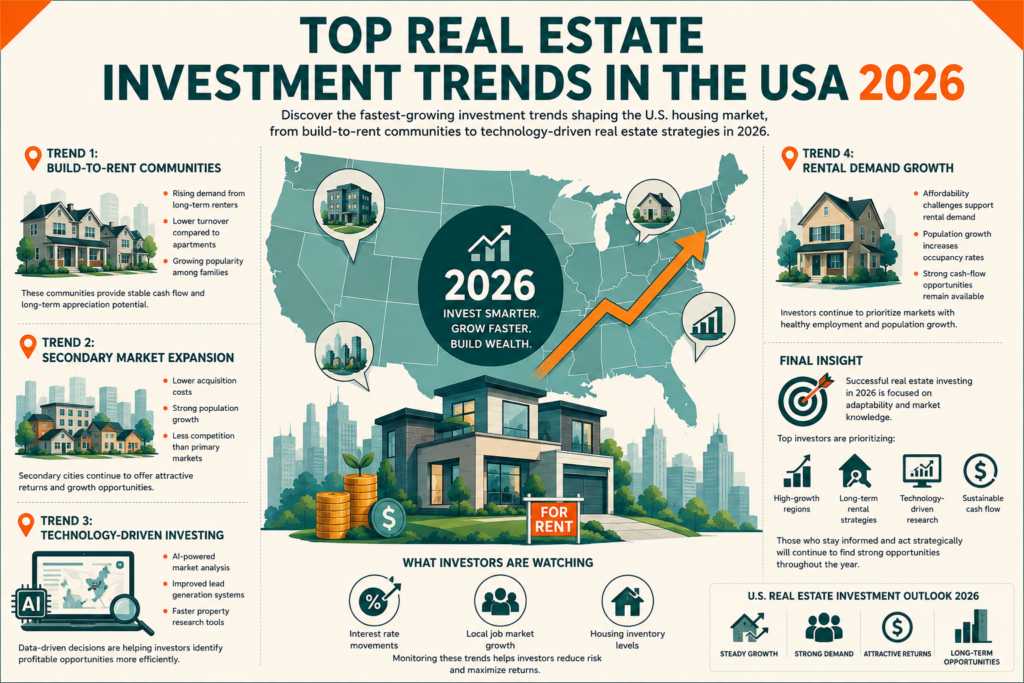
The U.S. real estate market continues to evolve in 2026, creating new opportunities for investors who understand changing consumer behavior, economic conditions, and emerging market trends.
Trend 1: Build-to-Rent Communities
Purpose-built rental neighborhoods are attracting strong investor interest.
- Rising demand from long-term renters
- Lower turnover compared to apartments
- Growing popularity among families
These communities provide stable cash flow and long-term appreciation potential.
Trend 2: Secondary Market Expansion
Investors are looking beyond major metropolitan areas.
- Lower acquisition costs
- Strong population growth
- Less competition than primary markets
Secondary cities continue to offer attractive returns and growth opportunities.
Trend 3: Technology-Driven Investing
Technology is reshaping how investors evaluate opportunities.
- AI-powered market analysis
- Improved lead generation systems
- Faster property research tools
Data-driven decisions are helping investors identify profitable opportunities more efficiently.
Trend 4: Rental Demand Growth
The rental market remains a major investment focus.
- Affordability challenges support rental demand
- Population growth increases occupancy rates
- Strong cash-flow opportunities remain available
Investors continue to prioritize markets with healthy employment and population growth.
What Investors Are Watching
Several key indicators are influencing investment decisions in 2026.
- Interest rate movements
- Local job market growth
- Housing inventory levels
Monitoring these trends helps investors reduce risk and maximize returns.
Final Insight
Successful real estate investing in 2026 is focused on adaptability and market knowledge.
Top investors are prioritizing:
- High-growth regions
- Long-term rental strategies
- Technology-driven research
- Sustainable cash flow
Those who stay informed and act strategically will continue to find strong opportunities throughout the year.
