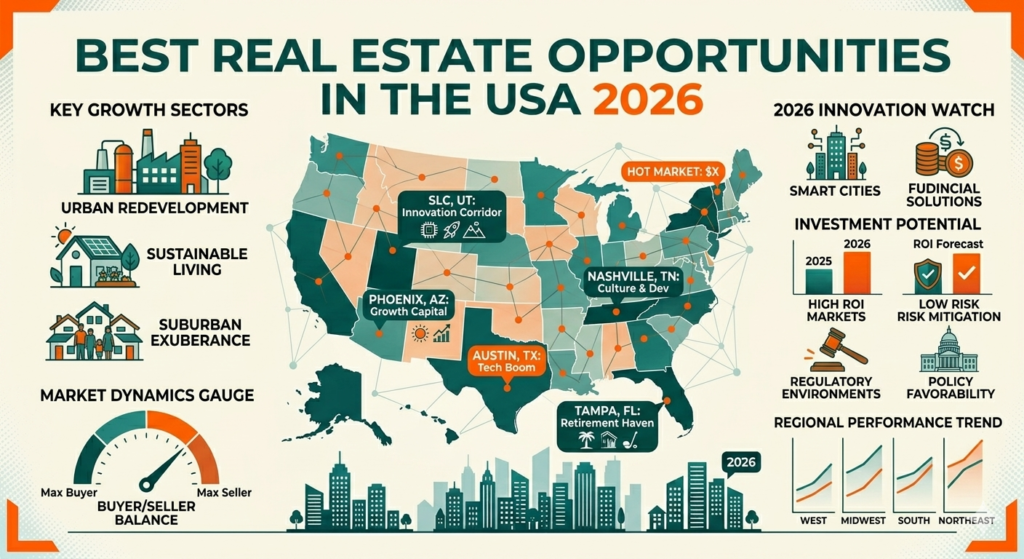
Despite a slower market, 2026 presents significant opportunities for investors, agents, and buyers who understand where to look.
📍 Opportunity 1: Secondary Cities
Secondary cities are becoming major investment targets due to:
- Lower entry prices
- Stable job growth
- Strong rental demand
These markets often offer better cash flow potential compared to expensive metro areas.
📍 Opportunity 2: Suburban Growth Zones
Suburban areas near major cities are seeing:
- Increased migration from urban centers
- Family-driven demand
- Better affordability compared to downtown cores
These areas are ideal for long-term appreciation strategies.
📍 Opportunity 3: Rental Market Strength
Due to affordability challenges:
- Many potential buyers remain renters
- Rental demand continues to rise
- Vacancy rates remain low in many regions
This creates strong opportunities for buy-and-hold investors.
📍 Opportunity 4: Distressed and Motivated Sellers
As the market slows:
- Some sellers need to offload properties quickly
- Price reductions are becoming more common
- Negotiation opportunities are increasing
This is where experienced investors find value deals.
📊 Strategy Shift in 2026
The biggest change in real estate strategy is the shift from:
- Short-term flipping → Long-term holding
- Speculation → Data-driven investing
- National trends → Hyper-local research
🧠 Final Insight
2026 is not a hype-driven market. It rewards:
- Patience
- Research
- Local expertise
- Smart financing decisions
Those who adapt to this environment will find consistent opportunities even in a slower market.
